
In a highly connected digital economy, a brand’s reputation can shift in a matter of minutes. Traditional social monitoring tools that rely on rigid keyword matches are no longer sufficient. They flood dashboards with irrelevant notifications while missing critical, context-heavy consumer conversations.
Modern marketing frameworks require automated systems powered by artificial intelligence. These tools decode complex language nuances and monitor competitive moves across multiple platforms simultaneously.
If you are looking to audit your current brand awareness or scale your monitoring infrastructure right away, you can check the latest availability through the official affiliate page.

The Strategic Importance of AI-Driven Brand Intelligence
Legacy listening platforms routinely miscategorize user feedback because they look at keywords in isolation. For instance, a phrase like “This new software update is sick” might be erroneously flagged as a negative health-related comment by basic systems. An AI-optimized listening engine recognizes this as highly positive user praise.
[ Unstructured Web Data ] ---> [ AI Context Engine ] ---> [ Categorized Sentiment Insights ]
                                      |
                                      +--------> [ Irrelevant Noise Filtered Out ]
Core Components of Modern Listening Architectures
Dynamic Entity Resolution: Distinguishing between different entities with identical names (e.g., separating discussions about Apple the company from apple the fruit).
Context-Aware Sentiment Analysis: Utilizing deep natural language learning algorithms to instantly identify sarcasm, frustration, or brand loyalty across global digital channels.
Automated Competitor Benchmarking: Evaluating changes in a competitor’s share of voice simultaneously with your own brand velocity tracking.
Using automated intelligence allows corporate communication teams to spot brewing public relations crises and capture high-intent sales opportunities before the competition does.
Critical Factors When Choosing an AI Monitoring Solution
When evaluating automated tracking software, avoid focusing strictly on raw volume metrics. Instead, focus on these data engineering pillars:
Near Real-Time Indexing Latency: The system must discover and index new web mentions rapidly so your team can respond to shifting narratives immediately.
Multi-Platform Breadth: Tracking must span beyond primary social networks to include forums, blogs, news portals, and digital communities.
High-Signal Reporting Engines: Look for clean dashboards that isolate actionable trends without requiring specialized database queries.
Expert Opinion: Prioritize software that eliminates complex boolean query setups. Modern tracking should function via intuitive inputs, lowering the barrier to entry for non-technical team members. To see how these intuitive features operate in real-world scenarios, view current pricing and product details.
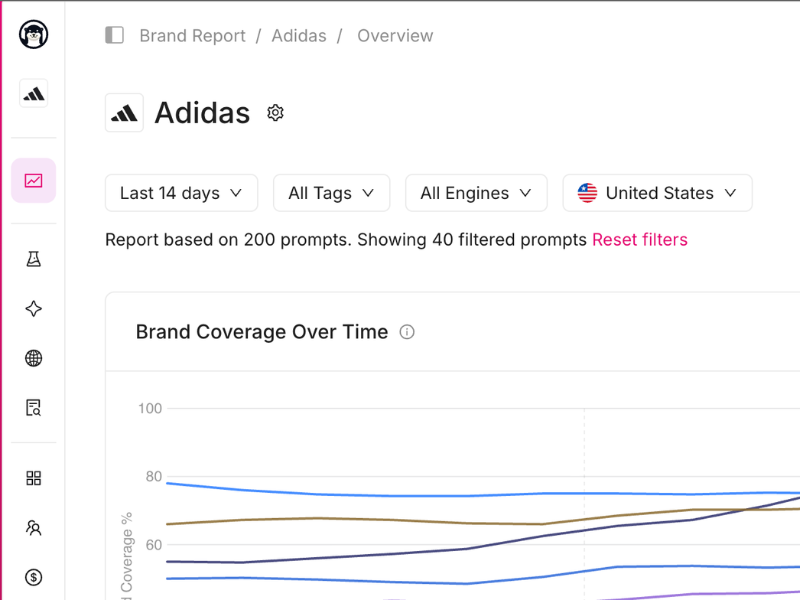
Strategic Framework: Manual Query Setup vs. Automated AI Listening
Understanding the operational differences between legacy tools and AI platforms is key to maximizing your team’s efficiency.
| Operational Metric | Manual Boolean Listening Frameworks | Automated AI Listening Architectures |
| Setup Complexity | High (Requires constructing complex string rules) | Low (Natural language inputs determine parameters) |
| Data Hygiene | Low (Requires regular cleanup of false positives) | High (Context engines filter out irrelevant chatter) |
| Competitor Tracking | Limited to specific predefined search terms | Dynamic (Automatically maps related market shifts) |
| Actionable Alerts | Static (Triggers strictly on mention volume spikes) | Predictive (Triggers on meaningful sentiment shifts) |
To discover how a streamlined listening solution adapts directly to your current multi-channel marketing campaigns, compare available options before making your decision.
Architectural Pros & Cons
Pros
Eliminates manual review hours by automating sentiment parsing.
Provides clear, quantified metrics for measuring share of voice and public sentiment.
Accelerates PR response times during fast-moving digital crises.
Limitations
Specific mathematical weighting for localized language nuances could not be independently verified, as core machine learning models remain proprietary to individual software providers.
If you want to replace manual social monitoring workflows with fully automated reporting systems, see today’s offers on the official affiliate page.
Frequently Asked Questions (FAQ)
What makes an AI social listening tool different from a basic Google Alert?
Google Alerts primarily focuses on indexed web articles and major news sites, often with significant delivery lag. AI social listening platforms monitor live social networks, forum spaces, and dynamic comments in near real-time, using natural language processing to categorize brand sentiment accurately.
Can automated monitoring platforms track private messages or locked communities?
No. For privacy and platform compliance reasons, standard public listening tools can only access and monitor open, publicly available web data and social feeds.
Relying on manual searches or outdated keyword trackers leaves brands vulnerable to missing critical industry updates. Moving to a dedicated, AI-supported social listening engine gives your marketing team the clarity needed to track sentiment trends, counter competitive actions, and manage brand reputation with complete certainty.
To implement automated monitoring for your digital footprints and unlock precise competitive intelligence, explore the complete specifications here.
